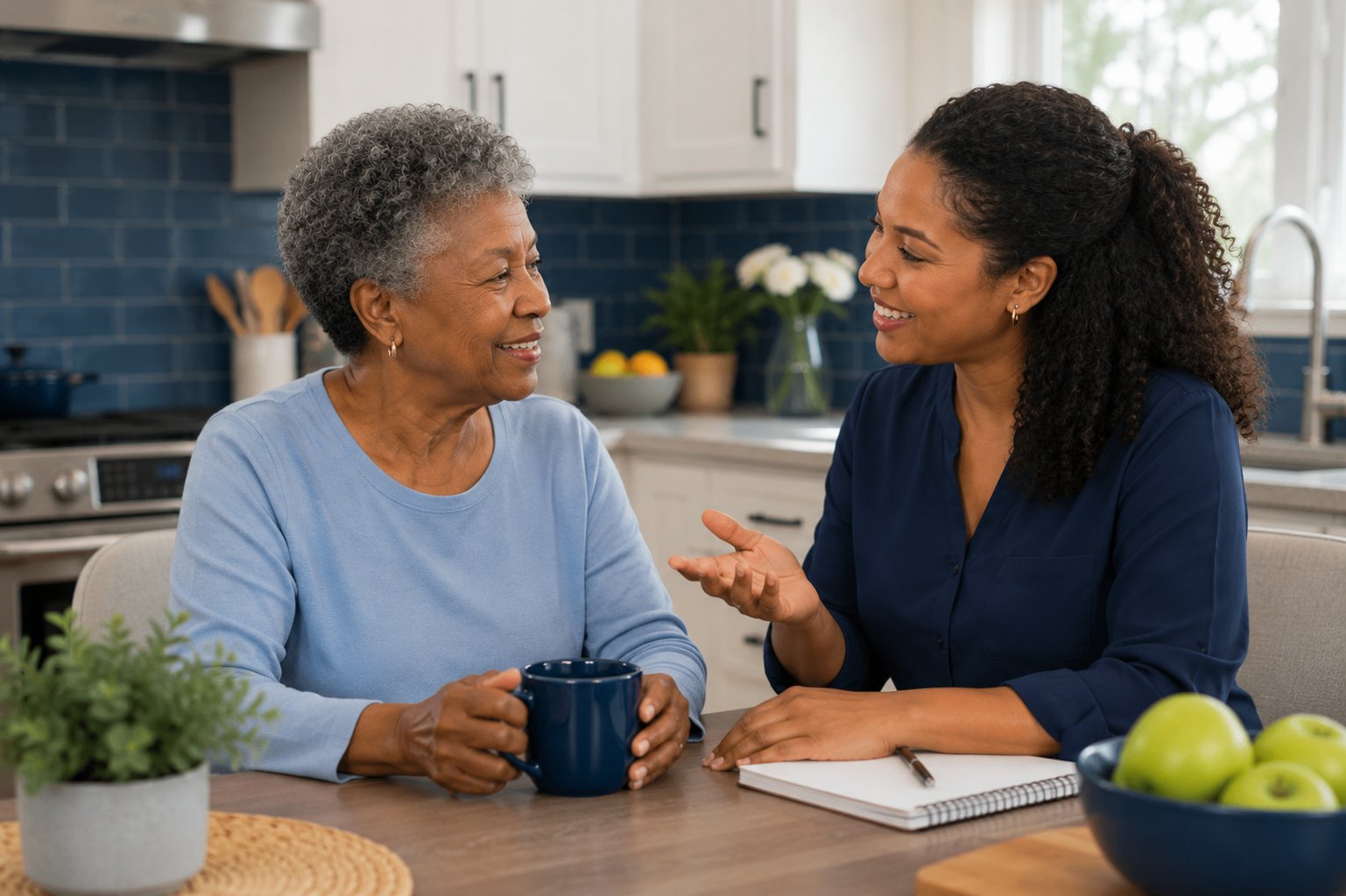
Your loved one can continue enjoying familiar kitchen routines more safely with a few practical adjustments around the space. Keeping commonly used items within easy reach, improving lighting, reducing clutter, and using simple cooking habits can make meal preparation easier while supporting their independence at home.
Small changes can also make everyday tasks feel less tiring or frustrating. You may notice that your parent or loved one spends more time reaching for cookware, moving around a crowded space, or cleaning up after meals. Addressing those challenges can help the kitchen remain easier to use.
Well’s Home Health Services provides support with everyday routines that may become easier with an extra set of hands. If your loved one could use assistance with meal preparation or related kitchen tasks, you can explore our home health aide services to learn more about the support available.
5 Ways to Make the Kitchen Easier and Safer to Use
Clear walkways, better lighting, and easy-to-reach kitchen items can make everyday tasks easier for your loved one to manage. Safer cooking habits and simpler meal preparation and cleanup routines can also help reduce unnecessary difficulty in the kitchen.
1. Keep Walkways and Floors Clear
Start with the areas your loved one uses most often. Keep floors free of bags, cords, loose items, and other objects that can get in the way when moving between the counter, sink, refrigerator, and stove.
Spills should also be cleaned up promptly. A clear path makes the kitchen easier to move through and reduces the need to step around obstacles.
2. Improve Lighting
Good lighting can make it easier to see ingredients, read labels, handle utensils, and notice spills or objects on the floor. Check the areas around the stove, sink, counters, and entrances to make sure they are well lit, especially in the evening.
3. Keep Frequently Used Items Within Reach
Place everyday dishes, cookware, ingredients, and small appliances where your loved one can reach them comfortably. Items used often are usually easier to manage when stored between waist and shoulder height.
This can reduce unnecessary bending, stretching, or reliance on step stools. Small adjustments like these can support your loved one’s confidence with everyday tasks and help elderly parents stay independent while still giving them support where it is useful.
4. Use Cooking Appliances More Safely
Pot handles can be turned inward so they are less likely to be bumped, and towels, paper products, or other flammable items should be kept away from cooking surfaces.
It may also help to build a routine around checking the stove, oven, and small appliances after use. The focus is on making familiar cooking steps easier to remember and manage while your loved one continues doing what they can comfortably handle.
5. Simplify Meal Preparation and Cleanup
Meal preparation does not have to involve several steps at once. Keeping commonly used ingredients together, preparing items in advance, or choosing simpler meals can make cooking feel more manageable.
Wiping spills and clearing work areas as tasks are completed can also prevent clutter from building up and make the next meal easier to prepare.
When Kitchen Difficulties May Point to a Need for More Support
Occasional kitchen frustrations can happen for many reasons, but repeated difficulty with familiar tasks may be worth paying attention to, especially if you are noticing changes in other parts of your loved one’s daily routine.
A harder time preparing meals or using kitchen appliances may be one part of a broader change in your loved one’s daily routines. Changes in the kitchen may also appear alongside other signs your elderly parent may need help.
You may notice similar changes with laundry, personal care, household tasks, or other routines they once handled comfortably on their own. Looking at these changes together can help you consider where a little more support could make daily life easier without taking over the things your loved one can still do.
Supporting Your Loved One Without Taking Over
Kitchen safety can support independence by making familiar routines easier to manage. A few adjustments to the space, simpler habits, or some extra help may allow your loved one to continue participating in activities that are familiar and meaningful to them.
Well’s Home Health Services can provide support with daily routines when your loved one begins needing more assistance at home. If kitchen routines are becoming harder for your loved one to manage, you can set an appointment with us to talk through their needs and consider what support may make daily life at home easier.