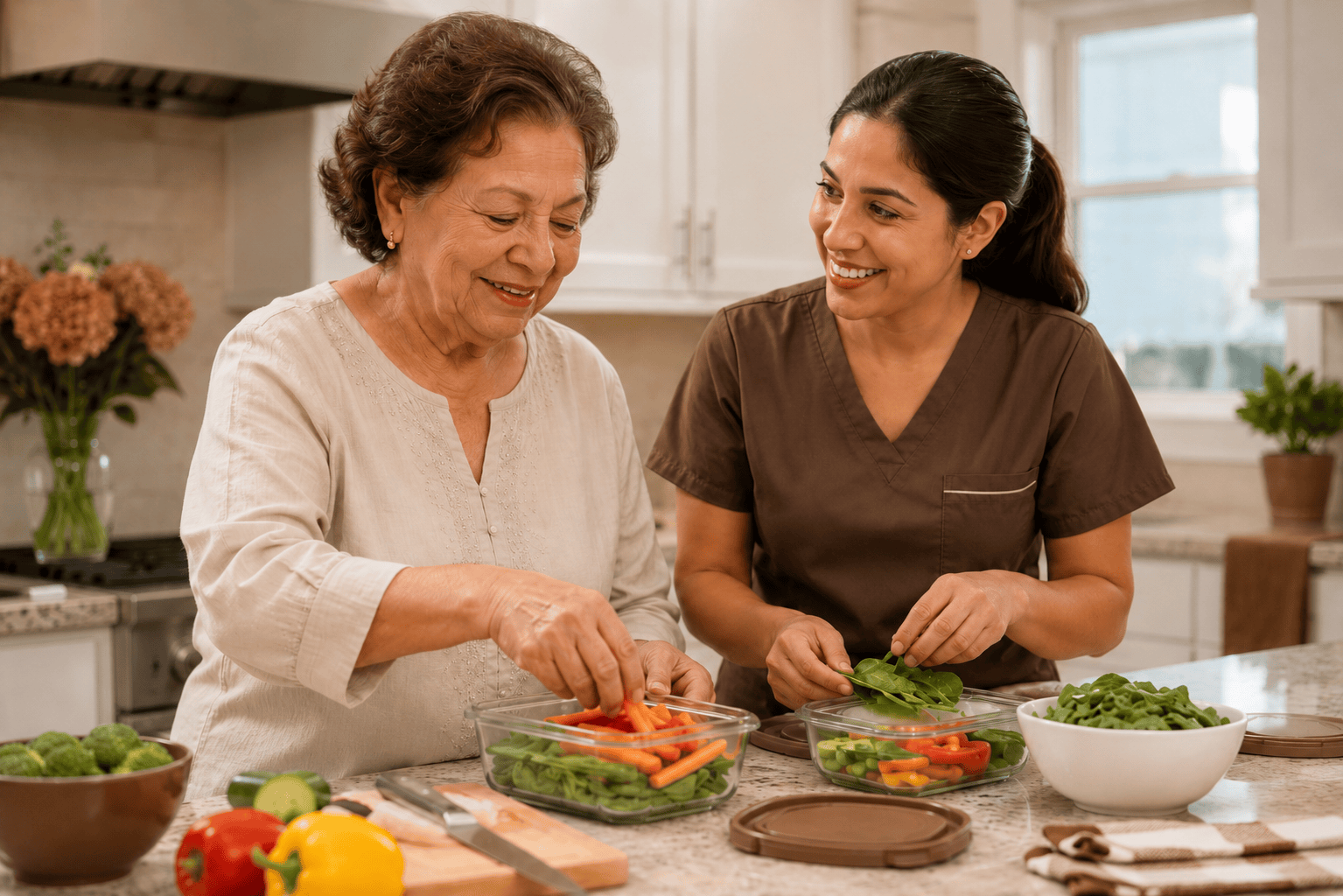
Preparing meals at home can be easier for your loved one when the routine stays simple, familiar, and realistic for what they can comfortably manage. Choosing easy-to-prepare foods, reducing unnecessary kitchen work, and planning ahead can make mealtimes feel less tiring while still allowing your loved one to stay involved.
Start with meals your loved one already enjoys and feels comfortable eating. Familiar choices can make planning less stressful and reduce the need to learn new recipes or preparation methods. Keeping a few dependable options on hand can also make it easier to prepare something on days when cooking feels like too much work.
If meal preparation starts taking more time or energy than your loved one can comfortably manage, additional help with everyday tasks may make the routine easier. At Well’s Home Health Services, our home health aide services can include meal preparation as part of practical support at home.
Plan Simple Meals Around Familiar Foods
Simple meals can make daily preparation easier without taking choice away from your loved one. Focus on foods they already know, enjoy, and can manage comfortably.
Try planning a few dependable breakfasts, lunches, and dinners instead of creating a completely different menu every day. Reusing familiar ingredients can also make grocery shopping and preparation more manageable.
Whenever possible, involve your loved one in choosing meals for the week. Even small decisions, such as choosing between two lunch options, can help them stay connected to their usual routine.
Reduce the Work Involved in Meal Preparation
Meal preparation does not have to involve many steps. Breaking tasks into smaller parts can make cooking feel more manageable for both you and your loved one.
Prepare Ingredients Ahead of Time
When you have extra time, you can wash produce, portion ingredients, or prepare part of a meal in advance. This reduces some of the work that needs to be done at mealtime.
You might also prepare a little extra food and divide it into smaller portions for another day. That gives your loved one an easier option when they do not feel like preparing something from scratch.
Keep Everyday Items Easy to Reach
Frequently used ingredients and kitchen tools should be easy to find and access. Keeping common items within comfortable reach can reduce unnecessary movement around the kitchen.
You can also store everyday utensils together and clear away items that are rarely used. A simpler setup makes it easier to focus on preparing the meal instead of searching through crowded cabinets or drawers.
Keep Your Loved One Involved
Needing help with meal preparation does not mean your loved one has to stop participating. You can handle the more demanding parts while leaving comfortable tasks for them to do on their own.
For example, you might take care of chopping or carrying heavier items while your loved one helps choose ingredients or arrange food for the meal. The right balance depends on what feels comfortable and safe for them.
Keeping your loved one involved where possible also helps maintain familiar routines. Rather than taking over the entire process, look for specific tasks that are becoming difficult and adjust only those parts.
Notice When More Help May Be Useful
Changes in meal preparation can sometimes be one sign that everyday routines are becoming harder to manage. You may notice that your loved one skips meals more often, gets tired before finishing preparation, or regularly runs out of basic ingredients.
These changes do not automatically mean professional care is needed. They can, however, help you identify which parts of the daily routine are becoming more difficult and where additional assistance may be useful.
If meal preparation is becoming difficult along with other household tasks, it may help to look at the kinds of assistance available at home. A home health aide may be able to help with some of the routines your loved one is finding harder to manage. Some of the home health aide tasks and duties that can support daily routines include meal preparation, light housekeeping, and errands.
Meal preparation may be the first routine you notice becoming difficult, but your loved one may also need help with other everyday needs. Our home health care services include different types of support that can be considered based on the assistance needed at home. Well’s Home Health Services can help with daily routines that have become harder to keep up with while allowing your loved one to remain involved in familiar activities as much as possible.
Make Mealtimes Easier Without Taking Away Independence
A practical meal routine should reflect what your loved one can comfortably manage while leaving room for their preferences and independence. Small changes in planning, preparation, and kitchen organization may be enough to make everyday meals easier.
Keep your loved one involved in decisions whenever possible, and add help only where it is genuinely useful. If meal preparation or other daily routines are becoming difficult and you want to discuss what kind of assistance may be appropriate, you can set an appointment to talk about their current needs.