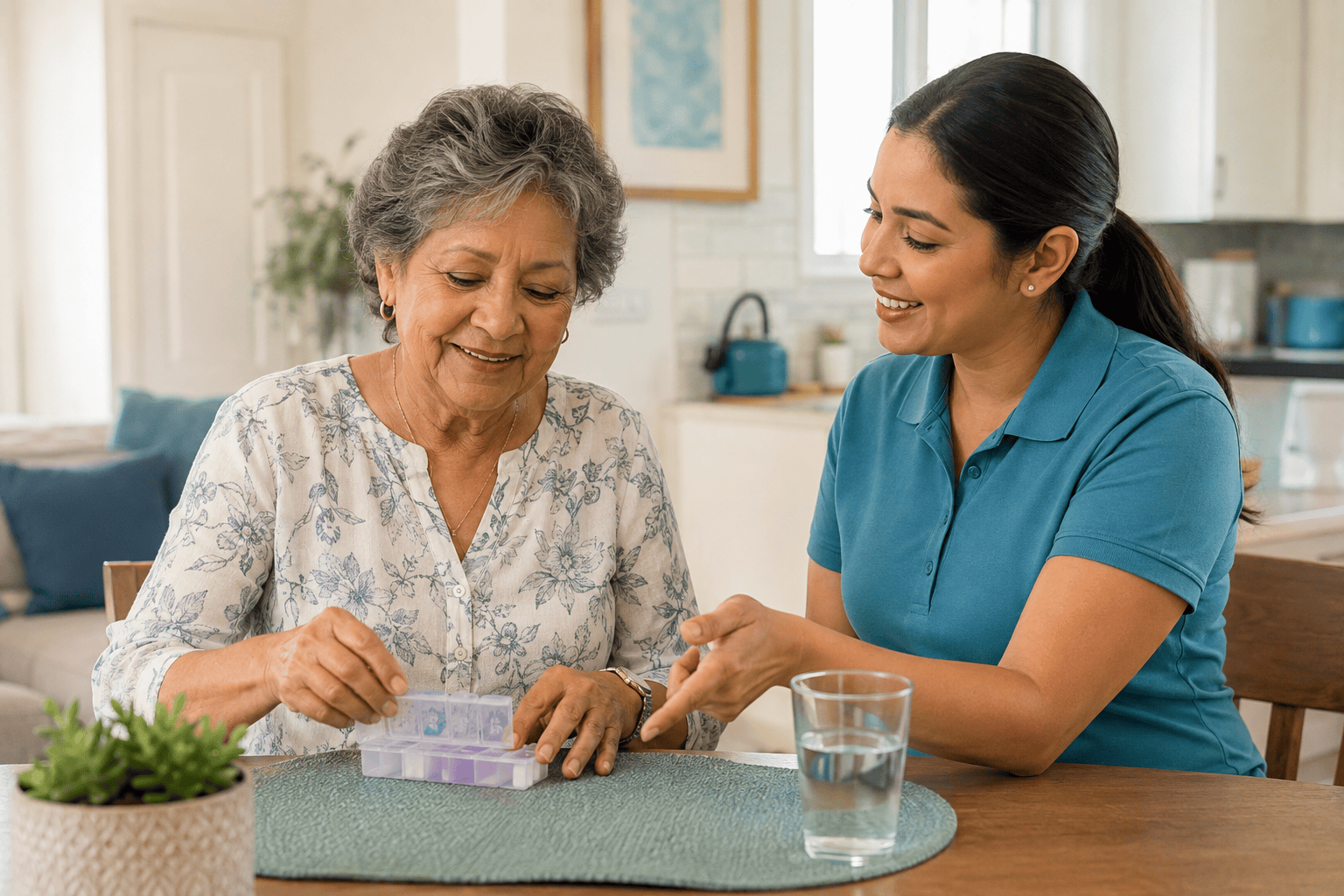
Non-skilled nursing care can help your loved one manage certain health-related routines and daily needs while remaining at home. Depending on their physician’s recommendations, that support may include medication reminders, personal care assistance, or supervision with specific concerns.
You may begin considering this type of care when your loved one is still comfortable at home but is having more difficulty keeping up with parts of the day on their own. Rather than assuming they need help with everything, it can be useful to look at which routines have changed and what kind of assistance has been recommended.
If those needs call for more regular support, non-skilled nursing care may be one option to consider. At Well’s Home Health Services, we provide non-skilled nursing care based on a care plan that can reflect physician recommendations and your loved one’s health-management needs. This gives the care team a clearer framework for where assistance is needed while keeping the focus on your loved one’s current situation.
Benefits of Non-Skilled Nursing Care
1. Provides Support Based on a Care Plan
Non-skilled nursing care can be tailored around your loved one’s health-management needs and physician recommendations. The care plan helps identify which areas require support instead of applying the same routine to every person.
This can make the assistance more relevant to what your loved one is actually having difficulty with. It also gives you a clearer picture of what the care is intended to address at home.
2. Helps With Medication Reminders and Daily Routines
Medication reminders can provide an extra prompt when your loved one is having difficulty keeping track of their prescribed routine. Depending on the care plan, assistance may also extend to personal care or other activities of daily living.
Medication reminders, personal care assistance, and post-surgery assistance are some of the services non-skilled nursing care may include. The exact care plan can differ depending on your loved one’s needs and the recommendations involved. Knowing which routines require help can make it easier to understand what role this type of care may have at home.
Any questions about medication instructions, dosages, or changes should still be directed to the appropriate healthcare professional.
3. Offers Help During Recovery at Home
Post-surgery assistance can help your loved one with parts of the daily routine that may be harder to manage after returning home, when that support is included in the care plan.
The type of help needed can vary from person to person. The focus should remain on following the established plan and helping with the daily activities that have become difficult during this period.
4. Provides Added Supervision When Needed
Some care plans may include symptom monitoring or fall risk supervision based on identified needs. This can give your loved one added observation and assistance within the responsibilities outlined in the care plan.
This type of support should not be treated as a replacement for medical assessment or treatment. If you notice a medical concern or have questions about symptoms, contact the appropriate healthcare professional for guidance.
When Your Loved One May Need Additional Support
Non-skilled nursing care may address several parts of your loved one’s daily routine, but their needs can change over time. You may begin noticing difficulty in other areas that are not the main focus of their current care plan.
When that happens, it may be useful to look at the other types of assistance available at home. At Well’s Home Health Services, our home health care services give you different care options to consider based on what your loved one currently needs.
Looking at the routines that are becoming harder can help you decide whether the existing support is still enough or whether another type of care may also be worth discussing.
Choose Support Around Your Loved One’s Current Needs
Non-skilled nursing care can be useful when your loved one needs help with specific health-management routines or daily activities at home. The care plan should reflect their current needs, while medical questions and treatment decisions remain with the appropriate healthcare professionals.
If you would like to discuss whether non-skilled nursing care may fit your loved one’s current needs, you can set an appointment with us so our care team can review the type of assistance you are looking for.