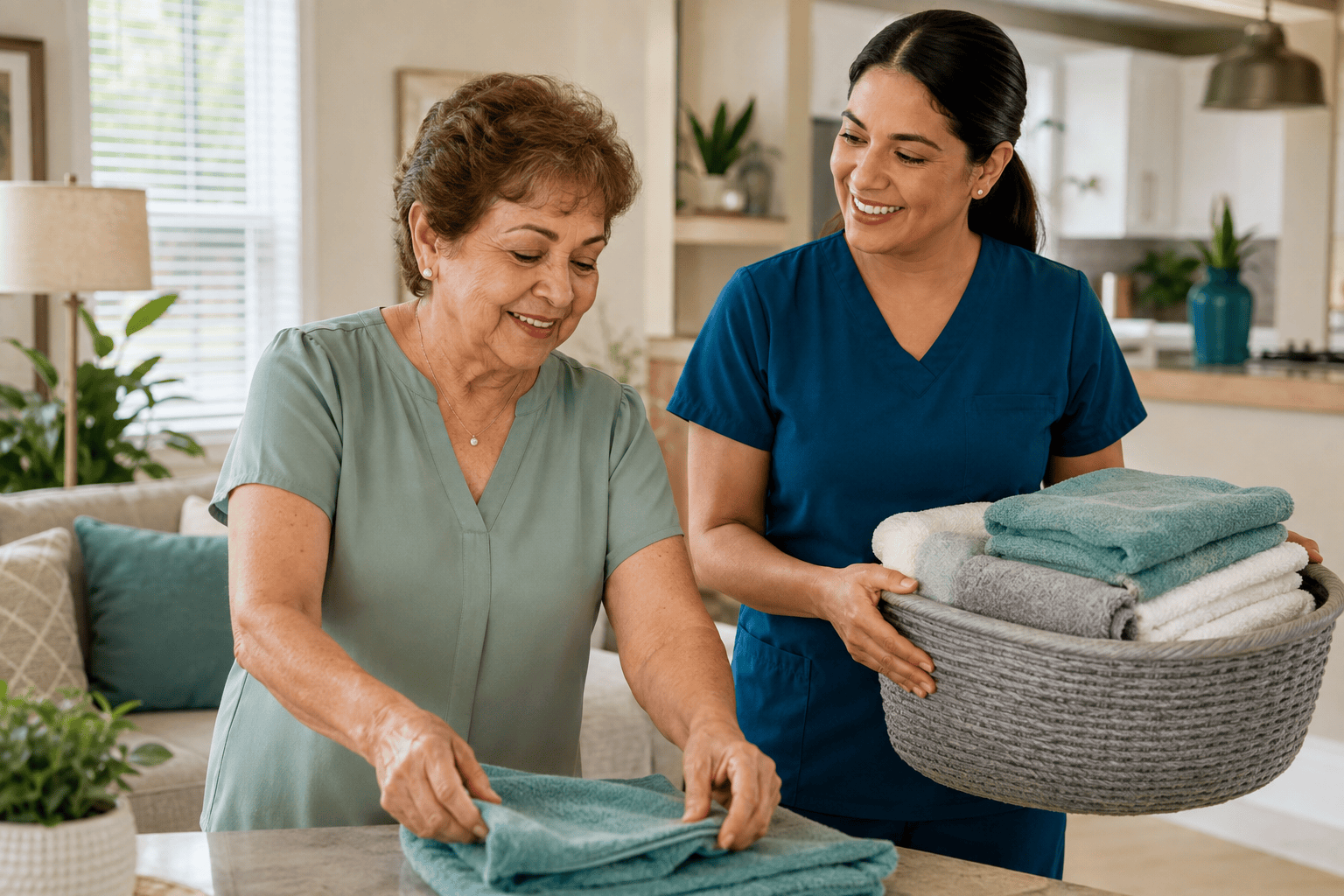
Light housekeeping can make everyday life at home easier for your loved one by keeping routine chores from piling up and making frequently used spaces easier to manage. A little help with household tasks can also leave more time and energy for the parts of the day your loved one still wants to handle on their own.
You may notice that your loved one is still comfortable managing many parts of the day but could use help keeping up with routine household tasks. At Well’s Home Health Services, our home health aide services can include light housekeeping as part of the practical assistance provided at home. This can allow your loved one to get help with chores that have become tiring while continuing to handle the parts of their routine they are comfortable managing.
1. Helps Keep Everyday Spaces More Manageable
Small household chores can become harder to keep up with when they start to accumulate. Light housekeeping can help keep commonly used areas in better order so your loved one is not faced with a long list of unfinished tasks.
That may include wiping surfaces, straightening frequently used spaces, or putting routine household items back where they belong. Keeping these tasks manageable can make the home feel easier to maintain from day to day.
2. Reduces the Physical Work of Routine Chores
Some household tasks require more bending, carrying, or standing than your loved one may want to do regularly. Even when they remain independent in other areas, certain chores can still take more effort than they used to.
Having help with those tasks can reduce the amount of physical work your loved one needs to take on. You can then focus on which chores are becoming difficult instead of assuming every household responsibility needs to be handled for them.
3. Leaves More Time for Other Priorities
Housekeeping can take time and energy away from activities your loved one would rather spend their day doing. When some routine chores are taken care of, they may have more room for familiar activities that matter to them.
That could mean preparing a simple meal, enjoying a hobby, or spending time with family. The point is not to remove responsibility, but to make the daily workload more manageable.
4. Supports Familiar Routines at Home
A little help with housekeeping can make it easier for your loved one to continue following the routines they already know. Support can focus on the tasks that have become difficult while leaving manageable responsibilities in their hands.
Household help is only one part of the assistance an aide may provide. Some home health aide tasks and duties can include light housekeeping, meal preparation, and errands, depending on the support your loved one needs.
Looking at which routines have become difficult can help you separate the tasks your loved one still wants to handle from those where some assistance would be useful. That keeps the conversation focused on their actual needs instead of treating help at home as an all-or-nothing decision.
5. Makes It Easier to Ask for Help Where It Is Needed
Light housekeeping can be a practical starting point when your loved one does not need help with everything but is finding certain chores harder to keep up with. Looking at specific tasks can make it easier for you and your loved one to decide where support would be useful.
Well’s Home Health Services can provide support based on the everyday tasks your loved one is finding harder to manage. We can focus that assistance on the routines where help would be most useful while respecting what your loved one still prefers to do independently.
Keep the Focus on What Your Loved One Needs
Light housekeeping should make daily routines easier without unnecessarily taking control away from your loved one. Pay attention to which chores they are putting off or finding harder to complete, then talk with them about where help would actually make the day easier.
If your loved one could use regular help with light housekeeping or other everyday tasks at home, you can set an appointment to discuss the kind of assistance that may be useful.