
Starting home care can feel unfamiliar at first, even when you and your loved one have already talked through the decision. In the first few weeks, you will likely be learning how the aide fits into the day, which routines need the most help, and what your loved one still prefers to do on their own.
Your loved one may need time to get comfortable with the new routine. You may also be figuring out when to step in, when to give them space, and what information the aide needs from you. Much of this becomes clearer once care is actually part of everyday life.
The early weeks are a chance to notice what feels natural, what needs adjusting, and how your loved one responds to the arrangement.
Expect Some Time to Adjust
A new care routine may take time to feel familiar. Your loved one and the aide are still learning how the day usually goes, what your loved one prefers, and how they communicate with each other.
Your loved one may be quiet at first or unsure about receiving help with certain tasks. They may also want things done in a particular way. Give them room to explain what feels comfortable instead of assuming that one awkward visit means the arrangement is not working.
If your loved one was hesitant before care started, keep using the same respectful approach you used when talking about help at home. Ask how the routine feels so far and whether there is anything they would like handled differently.
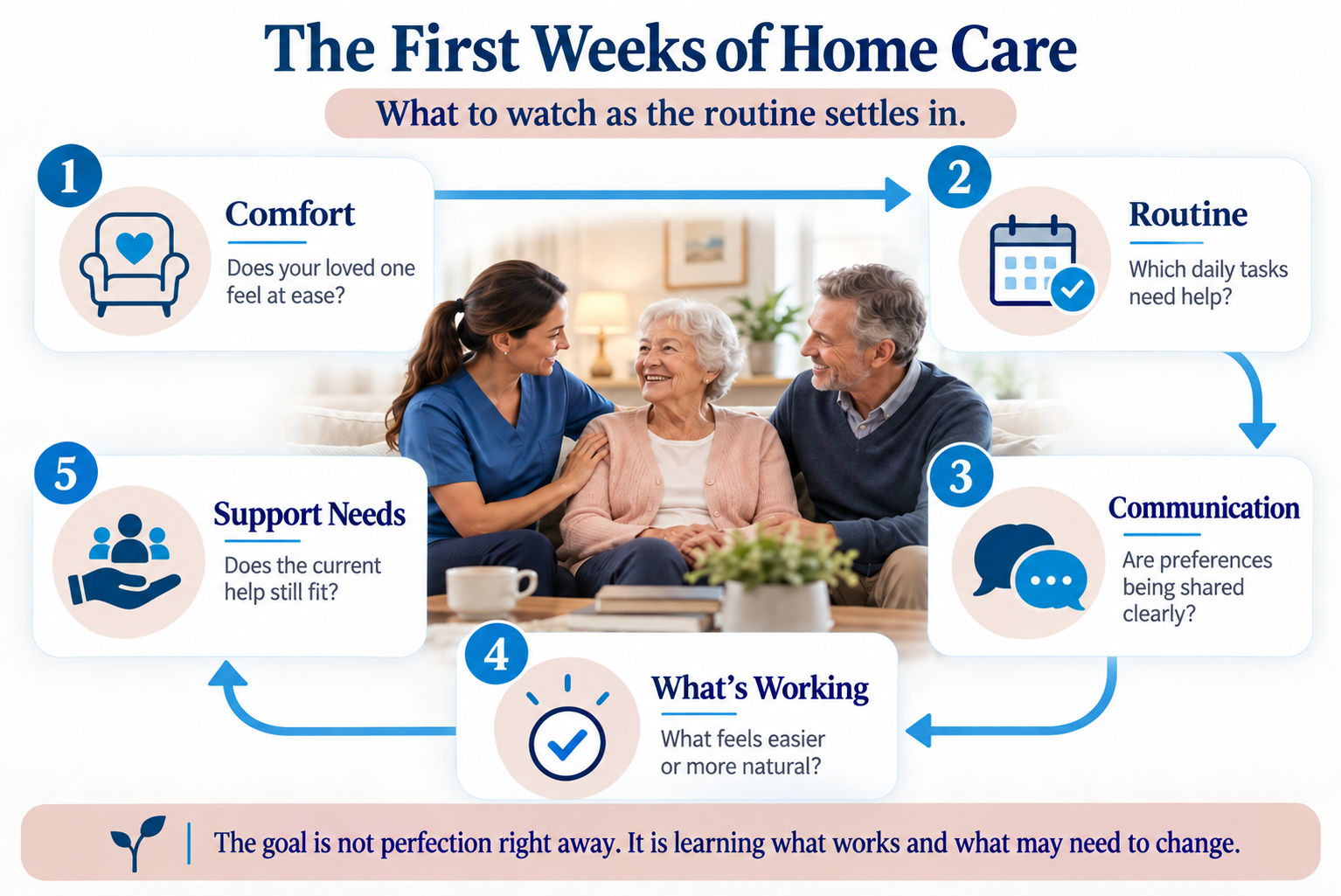
See How the Aide Fits Into the Day
Once the routine starts to settle, you will get a better sense of where the aide is most helpful. Some tasks may need regular support, while others may only require occasional help.
Personal care, household tasks, and everyday routines can look different from one person to another. Understanding how home aides help can give you a clearer idea of what the aide may assist with.
Pay attention to what your loved one still wants to manage on their own. Help at home should not automatically mean handing over every responsibility. Your loved one may still want to prepare part of a meal, choose what to wear, or handle a familiar routine without help.
Pay Attention to Communication and Comfort
Good communication matters most when everyone is still getting used to the arrangement. Your loved one should feel comfortable sharing preferences, asking questions, or saying when something does not feel right.
Small details can make a difference. Your loved one may prefer to do things in a certain order or keep commonly used items in the same place. Sharing those preferences early can help the aide understand how the household normally runs.
You may also start noticing the qualities that affect how comfortable the relationship feels. Dependability, respect, and clear communication are part of what makes a trusted caregiver. These qualities are easier to judge once you have seen how the aide interacts with your loved one over several visits.
Notice What Is Working
The first few weeks often show you things that were hard to predict before care began. You may find that one part of the day needs more help than expected, while another routine is going smoothly.
Ask your loved one what they have noticed too. They may like some parts of the arrangement and want changes in others. Their feedback can help you decide whether a small adjustment would make the routine feel more comfortable.
Try to look for patterns. One difficult day may not mean much, but repeated confusion or discomfort is worth paying attention to.
Know When to Ask About Other Care Options
Sometimes the first few weeks make it clearer that your loved one needs a different type of help than you first expected. If several parts of the day are becoming harder to manage, it may be useful to look at other care options.
That does not mean the original plan was wrong. You may simply have a better picture now that you have seen how care fits into your loved one’s actual routine.
At Well’s Home Health Services, we understand that care needs can become clearer once support is part of daily life. Our home health care services give you different options to consider based on the help your loved one needs at home.
We can look at what is working, where your loved one is still having difficulty, and what kind of support may be worth discussing next.
Give the Routine Time to Settle
The first weeks are about more than getting tasks done. Your loved one should feel heard, the aide should understand the household routine, and you should have a better sense of whether the arrangement feels right.
You can stay involved without checking every interaction. Ask your loved one from time to time how things are going and whether there is anything they would like changed.
After you have had time to see how the routine is working, you may also have a clearer idea of what questions remain. Well’s Home Health Services can help you look at those concerns in the context of the care available at home. Our care team can listen to what you have noticed and explain the options that may be relevant.
If you would like to discuss what you have noticed since care began, you can contact us to learn more about the support available for your loved one.